Average Reviews:

(More customer reviews)Are you looking to buy Where Shall My Wond'ring Soul Begin : The Landscape of Evangelical Piety and Thought? Here is the right place to find the great deals. we can offer discounts of up to 90% on Where Shall My Wond'ring Soul Begin : The Landscape of Evangelical Piety and Thought. Check out the link below:
>> Click Here to See Compare Prices and Get the Best Offers
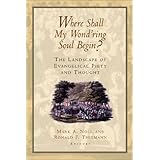
Where Shall My Wond'ring Soul Begin : The Landscape of Evangelical Piety and Thought ReviewI have used this book several times in survey courses (introduction to theology) as a good survey of different views that fall under the umbrella of Evangelicalism. This collection of essays was produced in connection with the new chair of Evangelical Theology Studies at Harvard Divinity School -- a post that might have gone to one of these contributors.There is a long-standing suspicion on both sides of academia and evangelicalism. As Ronald Thiemann states in his preface, evangelicalism has had a hard time in the academy generally, and Harvard specifically (often seen as a bastion of liberalism, yet always attracting conservative and evangelical students to the divinity school). However, this book, the endowed chair, and conferences sponsored at Harvard are meant to address this situation, and open both the academy to evangelicalism and vice versa.
The essays here address a wide range of practices, spiritual concerns, intellectual topics and theological beliefs. The first essay, written by Mark Noll, is the one most students of mine have found the most rewarding. They can relate to the idea of theology and ecclesiology contained in hymnody. Hymns and singing, in all sorts of conditions and for all sorts of purposes, forms a back-bone of faith that goes beyond any kinds of formal doctrines. Working through the power of hymns, Noll also traces the history of the evangelical movement in America, from the time of Edwards and the Wesleys forward, and addresses many topics that get contained in hymnody, such as social justice and ecumenical desires.
Dallas Willard, in his look at piety, describes evangelical piety as not the only kind, but a worthy kind, within the Christian tradition, different from but alongside worthies such as Thomas A Kempis. The three elements -- conviction, conversion, and testimony -- form the core of belief and practice for many; if you've ever wondered why evangelicals want to share their faith so much, this essay touches at the heart of that motivation.
William Abraham looks at the role of scripture as a foundation -- this would seem to go without saying, particularly with regard to evangelical thought. However, how we know what we know, and what we believe, has been at issue for hundreds of years. Abraham's journey into this field gets into difficult territory quickly; he doesn't address the infallibility/inerrancy issues of scripture so much as holding up the importance of scripture.
Alister McGrath is one of the first theologians with whom I was acquainted; his one-volume introduction to Christian theology remains a commonly used text. McGrath here develops the idea of trinitarian thinking in an evangelical context - while it is rare for this subject to come to the forefront of evangelical thinking, in fact most evangelicals are trinitarian implicitly, but concentrate much more on the 'parts' of God than on the mystery of the trinity. McGrath invites further consideration, connecting the ideas of the trinity to deepening faith in God as creator.
Cheryl Sanders looks at the idea of disciplined spirituality in evangelicalism, something unexpected to those outside; she traces this idea in context of her own education and upbringing, as well as the broader context of social justice and action, which similarly can be disciplined in approach -- look at the nonviolent actions in the Civil Rights campaign, largely led by evangelical leaders.
In some ways, Richard Mouw continues the idea began by Sanders, of evangelical responsibility to ethics and social action. Justice is important, and evangelicalism isn't an individualistic enterprise without care for the community. Mouw draws on historical figures (Luther, Calvin, etc.) as well as more recent experiences to flesh out this argument.
The final essay by David Wells speaks to the importance of tradition in evangelical thought and practice. While the traditions incorporated into evangelicalism are not as readily apparent as liturgical or dogmatic manifestations, they are nonetheless the guardian of evangelical integrity in the face of shifting sands of modernity and postmodernity.
This is a very brief book, but rich in spirit and information. It is worth reading by evangelicals and non-evangelicals, who would both gain insight and appreciation for various aspects of this important part of the Christian community.Where Shall My Wond'ring Soul Begin : The Landscape of Evangelical Piety and Thought Overview
Want to learn more information about Where Shall My Wond'ring Soul Begin : The Landscape of Evangelical Piety and Thought?
>> Click Here to See All Customer Reviews & Ratings Now

0 comments:
Post a Comment