
Showing posts with label best book. Show all posts

1634: The Galileo Affair (Ring of Fire) Review

1634: The Galileo Affair (Ring of Fire)
Average Reviews:

(More customer reviews)
Are you looking to buy 1634: The Galileo Affair (Ring of Fire)? Here is the right place to find the great deals. we can offer discounts of up to 90% on 1634: The Galileo Affair (Ring of Fire). Check out the link below:

>> Click Here to See Compare Prices and Get the Best Offers

1634: The Galileo Affair (Ring of Fire) ReviewThis volume in the alternate history series based on Eric Flint's 2000 novel "1632" follows "Ring of Fire" and "1633," and is the first of several planned "1634: ..." books to be published. Even though "Ring of Fire" is an anthology, it should be read before "1634: The Galileo Affair," since stories in it introduce and develop many of the main characters (Father Mazzare, the Stones, Mazarini) and set up much of the plot. "1632" and "1633" should be read as well, of course.
At the beginning of "1634: The Galileo Affair," the new United States of Europe is not in the best strategic situation. Simultaneously at war with England, France, Spain, Denmark, Austria and various other polities, it is running short of allies - the Dutch Republic is in dire straights, while Bohemia has its hands full trying to break away from Austria. To try to break out of this encirclement and tap into Mediterranean trade, an embassy is sent to the Venetian Republic.
At the head of the embassy are Father Mazzare and Reverend Jones, along with Sharon Nichols and Tom 'Stoner' Stone, a nurse and chemist (respectively), who will be sharing their medical knowledge with the Italians as a demonstration of good faith. Accompanying Stone are his three teenage sons, who (following their hormones and the lovely Giovanna) quickly fall in with a group of incompetent but enthusiastic revolutionaries hoping to Americanize Italy. They are sucked into a wacky, hare-brained scheme to free Galileo from the Inquisition and take him north to Grantville and Freedom. This plot would probably be harmless were it not receiving expert assistance from a French agent provocateur under orders to discredit the USE. Meanwhile, the copies of the Papers of the Second Vatican Council and related twentieth century Catholic theology that were sent to Pope Urban VIII in "Ring of Fire" have been creating quite a stir in the highest ranks of the Church. The Pope is carefully considering what to do about Galileo, as well as the USE and its curious religious toleration.
"1634: The Galileo Affair" is quite a bit different from the other novels that have so far been published in the 163x series (and probably from those yet to be published, as well). This seems to be Flint's intention, and the reason he's writing the series with a large number of coauthors. In this volume, he is joined by English lawyer Andrew Dennis, with the result that military and political aspects of the story decrease dramatically, while more time is spent on romance and lawyerly discussion. Although I enjoyed the book overall, this is not my favorite approach.
Another notable feature of this volume in the series is that it ignores all of the plot threads developed in "1633," focusing entirely on Italy. According to Flint, "The Galileo Affair" is only the first of several books that will take place in 1634, each pursuing only one story line at a time, though all still tying in with each other. Currently five volumes are planned for this "1634: ..." 'story explosion' - "The Baltic War" (with David Weber), "Escape from the Tower" (Eric Flint solo), "The Austrian Princess" (with Virginia DeMarce) and "Bohemia" (a tentative title, with Mike Spehar) in addition to "The Galileo Affair." While some may be frustrated by the lack of connection to "1633," I personally feel that this approach is much preferable to the 'Robert Jordan method' of trying to cover every plot line at once and ending up not advancing any of them.
At any rate, if you enjoyed "1633" and "Ring of Fire," "1634: The Galileo Affair" should be worth checking out. If you're a fan of the series primarily because of Flint's military writing, the library may be the best choice.1634: The Galileo Affair (Ring of Fire) Overview

Want to learn more information about 1634: The Galileo Affair (Ring of Fire)?

>> Click Here to See All Customer Reviews & Ratings Now
Read More...

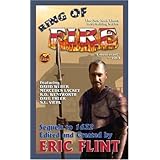
Ring of Fire (The Ring of Fire) Review

Ring of Fire (The Ring of Fire)
Average Reviews:

(More customer reviews)
Are you looking to buy Ring of Fire (The Ring of Fire)? Here is the right place to find the great deals. we can offer discounts of up to 90% on Ring of Fire (The Ring of Fire). Check out the link below:

>> Click Here to See Compare Prices and Get the Best Offers

Ring of Fire (The Ring of Fire) Review"Ring of Fire" is a collection of short stories set in the universe created by Eric Flint in his 2000 novel "1632." In "1632," the town of Grantville is ripped from modern day West Virginia and dropped in the middle of Germany, in the middle of the Thirty Years' War, by a cosmic accident (commonly considered an Act of God) which is eventually dubbed the 'Ring of Fire.'
The fifteen stories in this anthology seem to have been written after the publication of "1632," but before that of its sequel "1633." They take place concurrently with the action in those two novels: "Power to the People" by Loren K. Jones goes all the way back to the Ring of Fire that kicked off 1632, while Eric Flint's "The Wallenstein Gambit" is set in the middle of the year 1633. As with all anthologies, the styles and qualities of the stories varied from author to author, from the 16-page "To Dye For" by Mercedes Lackey to Flint's 120-page novella. However, although I enjoyed some stories in "Ring of Fire" more than others, I can honestly say there were none I actively disliked, which is pretty much as good as it gets for anthologies.
What makes "Ring of Fire" so interesting is the fact that it is not your typical anthology. Most 'spin-off' anthologies like this one feature stories peripheral to the main plot of the series, involve minor characters and don't play a significant role in the grand scheme of things. Some stories such as "Power to the People" and "When the Chips Are Down" by Jonathan Cresswell and Scott Washburn seem to follow that model. However, most of them actually play important roles shaping both the plots and the characters of the later books in the series. For example, David Weber (who coauthored "1633") writes a story about the founding of the new American navy that plays a prominent role in "1633" and Andrew Dennis's story sets up "1634: The Galileo Affair" (which he coauthored) and develops some of its main characters. Meanwhile, "The Wallenstein Gambit" incorporates other stories in "Ring of Fire," redraws the map of Europe, and lays the basis for forthcoming "1634: ..." novels.
The point is that this anthology plays an important role in the series, and needs to be read by anyone who wants to enjoy future 163x books. This is a part of Eric Flint's interesting approach to the whole series, which tries to make the '1632 universe' a full-bodied and realistically complex place. To do this Flint writes the main books of the series with a number of different coauthors (David Weber, Andrew Dennis, Mike Spehar, Virginia DeMarce), while at the same time allowing all of the authors who contributed to "Ring of Fire" to make their own mark on the developing series. Flint has even begun publishing fan fiction in an online magazine (the "Grantville Gazette") and incorporating it into 163x novels. It is (to my knowledge) a unique approach, and so far seems to be producing excellent results.
So not only is "Ring of Fire" a solid anthology in its own right, it is required reading for those who intend to follow Flint et al.'s 163x series. Although "1633" builds off of several stories in "Ring of Fire," it can be understood and enjoyed without reading the anthology. The same is less true of the "1634: ..." books that are currently being written and published. If you enjoyed "1632" enough to want to read more books in the series, "Ring of Fire" should be a sure bet.
To conclude, and to emphasize one last time the important role played by "Ring of Fire" in the development of the 163x series, I will sketch out the current shape of the series and indicate which stories in "Ring of Fire" are incorporated into each of the planned books. Of the fifteen stories in the anthology, only three do not seem to play a role in the larger series, though they may yet be incorporated into one of the volumes currently being planned or written.
"1633" with David Weber
---"In the Navy" by David Weber
---"A Matter of Consultation" by S.L. Viehl
---"Skeletons" by Greg Donahue
"1634: The Galileo Affair" with Andrew Dennis
---"American Past Time" by Deann Allen and Mike Turner
---"To Dye For" by Mercedes Lackey
---"A Witch to Live" by Walt Boyes
---"Between the Armies" by Andrew Dennis
"1634: The Baltic War" with David Weber
"1634: Escape from the Tower" (Eric Flint solo)
"1634: The Austrian Princess" with Virginia DeMarce
---"Biting Time" by Virginia DeMarce
"1634: Bohemia" (tentative title) with Mike Spehar
---"A Lineman for the Country" by Dave Freer
---"The Three Rs" by Jody Dorsett
---"Here Comes Santa Claus" by K.D. Wentworth
---"The Wallenstein Gambit" by Eric Flint
"1635" with Virginia DeMarce
Stories that don't (yet) play a role in the series:
---"Power to the People" by Loren K. Jones
---"Family Faith" by Anette M. Pedersen
---"When the Chips are Down" by Jonathan Cresswell and Scott WashburnRing of Fire (The Ring of Fire) Overview

Want to learn more information about Ring of Fire (The Ring of Fire)?

>> Click Here to See All Customer Reviews & Ratings Now
Read More...

1632 (Ring of Fire) Review

1632 (Ring of Fire)
Average Reviews:

(More customer reviews)
Are you looking to buy 1632 (Ring of Fire)? Here is the right place to find the great deals. we can offer discounts of up to 90% on 1632 (Ring of Fire). Check out the link below:

>> Click Here to See Compare Prices and Get the Best Offers

1632 (Ring of Fire) ReviewBasically, this book is about a coal-mining town in West Virginia which is mysteriously transported to Germany at the time of the Thirty Years War. This theme has been developed before, going back to Mark Twain (or maybe further). To my knowledge, S.M. Stirling was the first major writer to move a whole community back to another time, with his Nantucket Series, and now Eric Flint seeks to get his version in. I am a fan of this genre, so I expected to enjoy this book, and I did. One way that it is different from most of these stories is that it focuses on the "little people"--The movers and shakers of this book are not professors or military officers or big-time politicians. The hero is a failed boxer who is a minor union official. On the other hand, the book is filled with affectionate praise for King Gustavus Adolphus. Gustavus Adolphus was a real historical figure, and if you don't know who he is, don't worry, you will know when you finish the book! I enjoyed the book, think most who are interested by this idea will enjoy it. Only criticism I have are that too much time is spent with the time travellers offstage, describing the Battle of Breitenfield, a real historical battle. Some may be disappointed that a minimum of time is spent describing clever technological improvisations--These seem to be a staple of this genre, but there isn't much of it here. If you enjoyed this book, I'd look up H. Beam Piper's LORD KALVAN OF OTHERWHEN, S.M. Stirling's ISLAND IN THE SEA OF TIME, and L. Sprague deCamp's LEST DARKNESS FALL.1632 (Ring of Fire) Overview

Want to learn more information about 1632 (Ring of Fire)?

>> Click Here to See All Customer Reviews & Ratings Now
Read More...