Showing posts with label boxing biography. Show all posts

Ring of Hate: Joe Louis Vs. Max Schmeling: The Fight of the Century Review

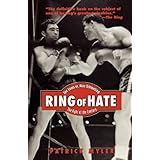
Ring of Hate: Joe Louis Vs. Max Schmeling: The Fight of the Century
Average Reviews:

(More customer reviews)
Are you looking to buy Ring of Hate: Joe Louis Vs. Max Schmeling: The Fight of the Century? Here is the right place to find the great deals. we can offer discounts of up to 90% on Ring of Hate: Joe Louis Vs. Max Schmeling: The Fight of the Century. Check out the link below:

>> Click Here to See Compare Prices and Get the Best Offers

Ring of Hate: Joe Louis Vs. Max Schmeling: The Fight of the Century ReviewAuthor, Patrick Myler, a great boxing historian, found himself a great subject: the second Joe Louis - Max Schmeling fight in 1938. Has there ever been a sporting event filled with such natural potential for drama? Max Scheming, the glowering "Black Ulan from the Rhine" promoted by non other that Nazi Propaganda Minister, Joseph Goebbels as the shinning example of racially pure German manhood, vs. Joe Louis, the poor black, sharecroppers son from Alabama. Add to this mix the fact the Schmeling had completely dominated Louis in a previous meeting, handing the Brown Bomber his only defeat on his seemingly unstoppable march to the heavyweight championship.
And what a fight it was. There has probably never been such fine destruction machine as was Joe Louis that night. Not even Iron Mike at his best could rival the ruthless savaging that Louis turned loose on the German. Watching a film of it this many years later, it still captures the viewer in a kind of primal terror. It looks for all the world like someone literally being beaten to death. The lack of sound only increases the horror, watching Schmeling screaming silently as Louis delivers body blows. By the end of the fight, Louis had literally broken his back as well as his spirit: Schmeling suffered three fractured vertebra.
The problem I have with the book is that Myler doesn't harness the natural drama of the event. The focus and pace of the book is all wrong, with the fight itself occupying a single chapter in the middle, with the bulk of the book describing the contrasting careers of the two fighters. The author, in fact, seems determined to tell his story without flare. In quoting the great sports writers of the day, like Grantland Rice and Henry Mclemore, Myler hopes to give us an example of the overheated prose of the day. "What such sensitive souls seemed to forget, or chose to ignore, was that Louis was simply doing a job, and doing it to the best of his ability," sniffs the author.
Louis just "doing a job"? Nonsense. Louis often said himself that by the time he climbed into the ring, he hated the German. Further, Louis admitted that Schmeling was the only man he had consciously wished to hurt during a fight. Louis was doing something much more than simply delivering a professional job of boxing. Watch the film of the fight if you ever get the chance. Joe wasn't simply trying to win a boxing contest. He was trying to punish the German as brutally as possible.
What Myler has forgotten in this book is something men like Grantland Rice lived by: readers love drama. Ironically enough, the passages from the old sports writing greats, while included dismissively, are the most passionate and exciting in the book.
So why give it four stars? Because Myler is an extremely worthwhile boxing historian, and he manages to give a very interesting portrait of the two combatants. By books end, Max Schmeling emerges as a man of great integrity and class. He risked much in Nazi Germany, using his status as national sports hero to save many Jewish friends from the death camps, even hiding two Jewish friends in his house during Kristallnacht. When pressed by Goebbels to fire his Jewish manager, Joe Jacobs, he flatly refused.
I learned much about Joe Louis as well. Myler describes all of Louis' well-known flaws: the womanizing, the utter failings as husband and father, the drug addiction, all told without flinching. Yet Myler manages to convey the thing about Joe Louis that was touching as well. He was always flatly honest, whether giving an opponent in the ring credit or admitting his own failings as a father, husband, and ultimately a man.
By the end of their lives, the two former foes were close friends. Schmeling always sent Louis money over the years, through all of Joe's business and tax troubles, and in fact seemed to genuinely love the man who had once broken his back in the ring. Myler missed the mark on the drama of the fight, but the lives of the two fighters he does up very nicely. -Mykal BantaRing of Hate: Joe Louis Vs. Max Schmeling: The Fight of the Century Overview

Want to learn more information about Ring of Hate: Joe Louis Vs. Max Schmeling: The Fight of the Century?

>> Click Here to See All Customer Reviews & Ratings Now
Read More...

Hitters, Dancers and Ring Magicians: Seven Boxers of the Golden Age and Their Challengers Review

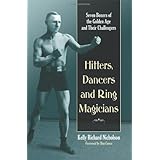
Hitters, Dancers and Ring Magicians: Seven Boxers of the Golden Age and Their Challengers
Average Reviews:

(More customer reviews)
Are you looking to buy Hitters, Dancers and Ring Magicians: Seven Boxers of the Golden Age and Their Challengers? Here is the right place to find the great deals. we can offer discounts of up to 90% on Hitters, Dancers and Ring Magicians: Seven Boxers of the Golden Age and Their Challengers. Check out the link below:

>> Click Here to See Compare Prices and Get the Best Offers

Hitters, Dancers and Ring Magicians: Seven Boxers of the Golden Age and Their Challengers ReviewKelly Richard Nicholson's new boxing book, HITTERS, DANCERS AND RING MAGICINAS: SEVEN BOXERS OF THE GOLDEN AGE AND THEIR CHALLENGERS, examines seven great turn of the century fighters - George "Kid" Lavigne (21 page chapter), Bob Fitzsimmons (39 pages), "Barbados" Joe Walcott (14 pages), Joe Gans (19 pages), "Terrible" Terry McGovern (19 pages), Sam Langford (21 pages), & Stanley Ketchel (33 pages) - who fought in the years after the transition from the bareknuckle era to the gloved one. The author starts off with a brief but informative chapter that outlines the evolution of prizefighting up to the aforementioned transition, then provides generally excellent chapter-long biographies of each of the above boxers (with profiles of their most noteworthy opponents), and winds up with a chapter regarding devvelopments in the sport since the "Golden Age", with the opinions of the author and those of past and present historians as to some of the merits of "old time" fighters relative to boxers of subsequent eras. On the whole, this is a good - albeit short - book, well written, insightful, entertaining, and well-researched.
There is, however, a major problem with Nicholson's work, which is that it shortchanges its (logical) primary audience/buyers: "hardcore" fight fans. One would think that boxing aficionados (those of us who are interested in all boxing eras, anyway) would have ALREADY read the available (full length) biographies of some of the magnificent seven Nicholson examines, such as International Boxing Research Organization (IBRO) member Clay Moyle's utterly superb SAM LANGFORD: BOXING'S GREATEST UNCROWNED CHAMPION (2007), Colleen Aycock and Mark Scott's excellent - albeit very biased - JOE GANS: A BIOGRAPHY OF THE FIRST AFRICAN-AMERICAN WORLD BOXING CHAMPION (2008), and any of the recently published and generally good bio's of "Freckled Bob" (though my favourite is still Gilbert Odd's THE FIGHTING BLACKSMITH: THE STORY OF BOB FITZSIMMONS [1976]), so one must wonder why he devoted (whole and, in the case of Fitz, long) chapters to Langford, Gans, and Fitzsimmons, especially since he imparts little, if any, new info about them. Surely, Nicholson would have better served hardcore boxing fans better if he had gone into greater depth regarding the lives (and fights!) of Lavigne, Walcott, and McGovern (I exclude Ketchel here because, while there hasn't been an in depth bio written of him lately - a good one, anyway - there are some good Ketchel profiles out there already, such as the chapters on the "Michigan Assassin" in Moyle's book and in Graeme Kent's THE GREAT WHITE HOPES: THE QUEST TO DEFEAT JACK JOHNSON [2005], and on IBRO member Monte Cox's website, coxscorner) AND providedlonger, more detailed profiles of the super seven's worthier opponents and other greats of that era, such as Young Griffo, George Dixon, "Young" Peter Jackson, "Mysterious" Billy Smith, Bobby Dobbs, Jack Blackburn, Dave Holly, "Nonpareil" Jack Dempsey, Kid McCoy, Tommy Ryan, etc (AND, perhaps, given a couple of them the full chapter treatment - indeed, if written with casual or new fans in mind, it might have been better to write full [but shorter] chapters on more than just these seven fighters).
Other quibbles with thisbook include a) its dearth of photos (just one or two of each of the seven pugilists); b) the lack of a chapter specifically addressing the different conditions (equipment, rules, etc) under which turn of the century boxers fought compared to other eras, which would have benefited the "casual" boxing fans who grabbed this work (while the author does mention old time conditions here and there in the first eight chapters and addresses some of the differences in the book's Afterword, he more or less elaborates those differences as "asides" or brief discussions rather than making a cohesive argument on a particualr facet of boxing; for example, Nicholson could have explained that fighters of the seven's era were/had to be MUCH more durable than, say, modern fighters because the conditions necessitated it, conditions such as fighting with smaller, less padded, less water-resistant gloves that had separate, unpadded thumbs, fighting without benefit of mouthguards, protective cups, and lubricants on the face, having to deal with referees who regularly turned a blind eye to all manner of fouls, having to occasionally fight opponents from higher weight classes to make ends meet when bouts with good boxers of one's own weight were hard to come by, having to often enter the ring for bouts while nursing serious injuries, etc, and the author could have pointed out that, although modern fighters use gloves with much more padding than in previous eras, engage in championship bouts that are of shorter duration than in previous eras, generallt fight much less often, and are reputed to be fitter and better conditioned than fighters of yesterday, they, nonetheless, tend to throw less punches per round than inany gloved era, save the "Golden Age" when fights were often of MUCH greater duration and the average fighter fought much more frequently ~ okay, okay, maybe TOO much detail here); c) given the brevity of the book (just 188 pages of "text") and its price, the author really ought to have included the sevne fighters' ring records or, at least, their measurements; d) Nicholson's erroneous statement that former heavyweight chasmpion Jim Jeffries was 6'2", which so many others have also claimed (this is a pet peeve of mine because in photos and film clips that show him standing next/close to the 5'11' or 11 1/2" or 11 3/4" Fitzsimmons or the 6'1" James J. Corbett, the "Boilermaker" seems to be about the same height as - if not shorter than - the former and definitely appears to be at least 2 inches shorter than the latter); e) the author's ridiculous assertion (while trying to illustrate the evolution of ring technique) that Gene Tunney's improved showings in subsequent bouts against Harry Greb after getting pummeled in their first encounter was a victory of "Gene's (improving) ring science" over Greb's (unorthodox) ring style (not only does Nicholson ignore the fact that the "Fighting Marine" grew from a "medium-sized" light heavyweight to a [small] heavyweight during the course of their five bout series whereas the "Pittsburgh Wildcat" remained a natural middleweight, that Tunney was young and edging toward his prime while Greb started to go "downhill" some time around their second or third bout, and that Greb's eyesight had been progressively deteriorating since BEFORE the first Tunney bout, but the author also doesn't seem to grasp the fact that "Greb's all-angles attack" WAS a demonstration of ring science in that positioning [and re-positioning) oneself at an angel to an opponent at which one can easily hit one's counterpart while he/she cannot easily land in return IS one of the most important skills in ring craftmanship - indeed, whenever Tunney spoke of his bouts with the "Human Windmill", he made a pointof saying that Greb rarely stood dirrectly in front of him and was always moving, either in and out on Gene or circling to the side); f) the lack of a more in depth account of the 1904 Walcott-Gans bout (the Aycock & Scott book also failed toprovide one and Nicholson should have known this because he states that he read their book, so it could have been something new for him to "bring to the table"); g) the lack of a citation concerning the weigh-in weights of Gans and Lanjgford for their 1903 mill (I only mention this because Nicholson's info contradicts the weights given by Aycock & Scott AND by Moyle, and NONE of the three books cite a source); and h) the fact that the chapter/endnotes and their "citation numbers" often do not correspond/align. (Perhaps, I am nitpicking on some points above, but one must assume that a HISTORIAN is probably writing for an informed audience, right? In addition, this book is pretty expensive relative to its length/size.)
STILL, this is, again, a good informative book, especially for casual or new boxing fans, but might not be worth the $30+ outlay to boxing fans who've already familiarized themselves with Lavigne, Fitz, Walcott, Gans, McGovern, Langford, and Ketchel via other sources. Incidentally, all of the books cited above are available here at Amazon.com and I highly recommend all of them.Hitters, Dancers and Ring Magicians: Seven Boxers of the Golden Age and Their Challengers Overview

Want to learn more information about Hitters, Dancers and Ring Magicians: Seven Boxers of the Golden Age and Their Challengers?

>> Click Here to See All Customer Reviews & Ratings Now
Read More...