Showing posts with label germany. Show all posts

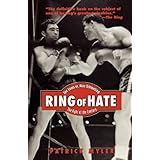
Ring of Hate: Joe Louis Vs. Max Schmeling: The Fight of the Century Review

Ring of Hate: Joe Louis Vs. Max Schmeling: The Fight of the Century
Average Reviews:

(More customer reviews)
Are you looking to buy Ring of Hate: Joe Louis Vs. Max Schmeling: The Fight of the Century? Here is the right place to find the great deals. we can offer discounts of up to 90% on Ring of Hate: Joe Louis Vs. Max Schmeling: The Fight of the Century. Check out the link below:

>> Click Here to See Compare Prices and Get the Best Offers

Ring of Hate: Joe Louis Vs. Max Schmeling: The Fight of the Century ReviewAuthor, Patrick Myler, a great boxing historian, found himself a great subject: the second Joe Louis - Max Schmeling fight in 1938. Has there ever been a sporting event filled with such natural potential for drama? Max Scheming, the glowering "Black Ulan from the Rhine" promoted by non other that Nazi Propaganda Minister, Joseph Goebbels as the shinning example of racially pure German manhood, vs. Joe Louis, the poor black, sharecroppers son from Alabama. Add to this mix the fact the Schmeling had completely dominated Louis in a previous meeting, handing the Brown Bomber his only defeat on his seemingly unstoppable march to the heavyweight championship.
And what a fight it was. There has probably never been such fine destruction machine as was Joe Louis that night. Not even Iron Mike at his best could rival the ruthless savaging that Louis turned loose on the German. Watching a film of it this many years later, it still captures the viewer in a kind of primal terror. It looks for all the world like someone literally being beaten to death. The lack of sound only increases the horror, watching Schmeling screaming silently as Louis delivers body blows. By the end of the fight, Louis had literally broken his back as well as his spirit: Schmeling suffered three fractured vertebra.
The problem I have with the book is that Myler doesn't harness the natural drama of the event. The focus and pace of the book is all wrong, with the fight itself occupying a single chapter in the middle, with the bulk of the book describing the contrasting careers of the two fighters. The author, in fact, seems determined to tell his story without flare. In quoting the great sports writers of the day, like Grantland Rice and Henry Mclemore, Myler hopes to give us an example of the overheated prose of the day. "What such sensitive souls seemed to forget, or chose to ignore, was that Louis was simply doing a job, and doing it to the best of his ability," sniffs the author.
Louis just "doing a job"? Nonsense. Louis often said himself that by the time he climbed into the ring, he hated the German. Further, Louis admitted that Schmeling was the only man he had consciously wished to hurt during a fight. Louis was doing something much more than simply delivering a professional job of boxing. Watch the film of the fight if you ever get the chance. Joe wasn't simply trying to win a boxing contest. He was trying to punish the German as brutally as possible.
What Myler has forgotten in this book is something men like Grantland Rice lived by: readers love drama. Ironically enough, the passages from the old sports writing greats, while included dismissively, are the most passionate and exciting in the book.
So why give it four stars? Because Myler is an extremely worthwhile boxing historian, and he manages to give a very interesting portrait of the two combatants. By books end, Max Schmeling emerges as a man of great integrity and class. He risked much in Nazi Germany, using his status as national sports hero to save many Jewish friends from the death camps, even hiding two Jewish friends in his house during Kristallnacht. When pressed by Goebbels to fire his Jewish manager, Joe Jacobs, he flatly refused.
I learned much about Joe Louis as well. Myler describes all of Louis' well-known flaws: the womanizing, the utter failings as husband and father, the drug addiction, all told without flinching. Yet Myler manages to convey the thing about Joe Louis that was touching as well. He was always flatly honest, whether giving an opponent in the ring credit or admitting his own failings as a father, husband, and ultimately a man.
By the end of their lives, the two former foes were close friends. Schmeling always sent Louis money over the years, through all of Joe's business and tax troubles, and in fact seemed to genuinely love the man who had once broken his back in the ring. Myler missed the mark on the drama of the fight, but the lives of the two fighters he does up very nicely. -Mykal BantaRing of Hate: Joe Louis Vs. Max Schmeling: The Fight of the Century Overview

Want to learn more information about Ring of Hate: Joe Louis Vs. Max Schmeling: The Fight of the Century?

>> Click Here to See All Customer Reviews & Ratings Now
Read More...

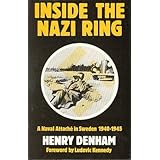
Inside the Nazi Ring: Naval Attache in Germany Review

Inside the Nazi Ring: Naval Attache in Germany
Average Reviews:

(More customer reviews)
Are you looking to buy Inside the Nazi Ring: Naval Attache in Germany? Here is the right place to find the great deals. we can offer discounts of up to 90% on Inside the Nazi Ring: Naval Attache in Germany. Check out the link below:

>> Click Here to See Compare Prices and Get the Best Offers

Inside the Nazi Ring: Naval Attache in Germany ReviewSweden's in WWII is an enigma to many, including to Swedes. Denham gives an excellent view from inside of the role that Sweden played. For six years, he lived in Sweden, dealing with those who supported both sides in the war, while providing essential intelligence to Great Britain. For those who don't speak Swedish, this is an excellent introduction to a little-know player on the WWII stage.Inside the Nazi Ring: Naval Attache in Germany Overview

Want to learn more information about Inside the Nazi Ring: Naval Attache in Germany?

>> Click Here to See All Customer Reviews & Ratings Now
Read More...

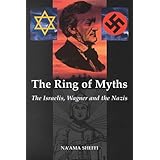
The Ring of Myths: The Israelis, Wagner and the Nazis Review

The Ring of Myths: The Israelis, Wagner and the Nazis
Average Reviews:

(More customer reviews)
Are you looking to buy The Ring of Myths: The Israelis, Wagner and the Nazis? Here is the right place to find the great deals. we can offer discounts of up to 90% on The Ring of Myths: The Israelis, Wagner and the Nazis. Check out the link below:

>> Click Here to See Compare Prices and Get the Best Offers

The Ring of Myths: The Israelis, Wagner and the Nazis ReviewAt a controversial Israel Festival concert on 7 July 2000, the Berlin Staatskapelle Orchestra under the baton of Daniel Barenboim played music by a passionate antisemite with Fascist tendencies.
After that they played some Wagner.
Ironies abounded that night. The concert was planned as an all-Wagner night: a Jewish conductor leading a German orchestra playing German music in Jerusalem would provide fine symbolism for a night of reconciliation. Instead rightwing Israeli politicians intervened: threats were made to Festival funding, pressure was applied. The result? The music of one antisemitic composer was replaced with the music of two antisemitic composers, Schumann and Stravinsky. Schumann, like Wagner, died long before Nazism existed. But the antisemitic Stravinsky met privately with Mussolini, calling him "the hope of Italy and of Europe", wrote to assure the Nazis that he was of pure Aryan stock, and abandoned dealings with Jewish conductors and musicians in order to conform to Nazi sensibilities. Still, it was only when Barenboim played Wagner, after the Stravinsky, that controversy erupted.
Na'ama Sheffi's _The Ring of Myths: The Israelis, Wagner and the Nazis_ provides a guide through some of these ironies and puzzles. How, for example, can politicians think that imposing political control on what artists can play is an anti-Nazi act? And why did they select a composer who died long before Nazism existed but despised Nazism's political ancestors, who became a pacifist opposing German military spending and writing that Germany loses its soul when it tries to rule other nations, who condemned slavery and the exploitation of one "race" by another, who wrote works showing that the pursuit of power leads to evil and self-destruction, whose opera _Parsifal_ was banned by the Nazis, who also asked that the _Ring_ not be performed as a cycle, and performances of whose works actually declined under the Nazis?
Sheffi reveals that the ban was a historical accident: in 1938 the Palestine Orchestra (principally made up of Jews from Eastern Europe) protested against Kristallnacht by dropping the _Meistersinger_ overture from their next concert. The gesture was hurried but not unreasonable: the Nazis used _Die Meistersinger_ for propaganda purposes, as they misappropriated other German music and art, Beethoven, Bruckner, Goethe and Rembrandt in particular. But the scheduled concert after Kristalnacht had had Wagner on the program, so it was against Wagner in particular that the gesture was made. The Palestine Orchestra played Wagner again after that one-off cancellation (though in Cairo, not Jerusalem), but with the war's end and the creation of the state of Israel, the precedent of a musical boycott had been set.
Since then, Sheffi argues, Wagner has been built, in Israel, into a symbol of the holocaust, a symbol with little relationship to the actual historical personage, who, she observes, "did not devote his life to denigrating Jews and certainly not to annihilating them." The Israeli ban endorses the Nazi's malicious misreadings of Wagner; thus it remains a homage rather than a repudiation of Nazi cultural thought. A genuine rejection of Nazi ideas necessarily involves dismissing their claim to Wagner, just as the Nazi uses and misreadings of Goethe's _Faust_ (Faust as the German soul; Mephistopheles as corrupting Jew) are now remembered only to be dismissed with contempt.
Sheffi argues that the danger in using Wagner as Holocaust symbol and shorthand for Nazism is not only that it perpetuates a falsehood. Worse, it directs attention away from the individuals, political groups and social forces that really created and operated the Holocaust. The ban on Wagner "facilitated the obliteration of the true essence of the Holocaust from the Israeli collective memory ... From a man of culture and learning, problematic though his views were, [Wagner] became a man identified with the Holocaust; whereas the real threats of the past - not only extremist nationalism, racism, and systematic murder, but the enormous inherent danger to democracy - all became slogans, at best."
The real Wagner and his works, Sheffi argues, is being inappropriately used as a weapon in a cultural war within Israel. "Eventually the musical dispute proved to be only part of the general cultural clash in Israel, a clash reflected primarily in a fierce controversy over the cultural character of the state. Certain sectors - the Orthodox and national-religious Jews - began to perceive the desire to play Wagner's music as an attempt to Westernize Israeli culture while obliterating its original Hebrew Jewish identity."
Sheffi's explication of these themes, and her tracing of the history of this debate, ranges through 60-odd years of Israeli cultural and political history, and is considerably more subtle and nuanced than this review's brief outline can reveal. Israeli politics are both labyrinth and minefield, and the clarity of Sheffi's guidance through the twists and turns is something the reader can both admire and be grateful for.
Sheffi does not know her Wagner quite as well as she knows Israel, however. For example she is too credulous in relation to the various readings of antisemitic meanings into Wagner works, the Wagnerian equivalent of proofs that Bacon wrote Shakespeare. She also commits occasional solecisms like, "Wagner had been on close terms with his son-in-law." That "son-in-law" is Houston Stewart Chamberlain, a man who once saw Wagner from a distance, but who Wagner never met or even heard of. Chamberlain's involvement with Wagner's pathetic offspring began well after Wagner's death. Here Sheffi has fallen into the trap of trusting some of the makers of the "Ring of Myths" of her title, who tend to fudge the distance between Wagner and Chamberlain because Chamberlain really did contribute to Nazi ideology, which makes it tempting to place Chamberlain, falsely, in Wagner's Bayreuth circle. Obviously Sheffi sometimes relied on secondary sources, and in Wagner studies, where certain secondary sources are not exactly committed to truth and accuracy, that's fatal.
But those are quibbles. This is a thoughtful, generally well-researched and referenced book, clearly written, and showing alertness to nuances of meaning in a field where attention to nuance is a rare commodity.
Cheers!
LaonThe Ring of Myths: The Israelis, Wagner and the Nazis Overview

Want to learn more information about The Ring of Myths: The Israelis, Wagner and the Nazis?

>> Click Here to See All Customer Reviews & Ratings Now
Read More...

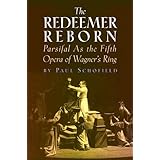
The Redeemer Reborn: Parsifal as The Fifth Opera of Wagner's Ring Review

The Redeemer Reborn: Parsifal    as The Fifth Opera of Wagner's  Ring
Average Reviews:

(More customer reviews)
Are you looking to buy The Redeemer Reborn: Parsifal as The Fifth Opera of Wagner's Ring? Here is the right place to find the great deals. we can offer discounts of up to 90% on The Redeemer Reborn: Parsifal as The Fifth Opera of Wagner's Ring. Check out the link below:

>> Click Here to See Compare Prices and Get the Best Offers

The Redeemer Reborn: Parsifal as The Fifth Opera of Wagner's Ring ReviewThis is an utterly marvelous book that I would very much recommend to anyone interested in Wagner. The author discusses Wagner's Ring and Parsifal within the context of Hinduism, Buddhism, Greek tragedy, Christianity, and the Grail legends. The fact that the author is able to discuss Wagner's work within the context of all of these spiritual sources in many ways explains why Wagner's music is viewed in mystical and quasi-religious terms by so many of his devotees.
The author analyzes the impact of Buddhism and Hinduism in Schopenhauer's writings. Schopenhauer of course had a major impact on Wagner's thought and it is interesting to see the mingling of Eastern and Western culture in Wagner's output. The author's discussion of Greek tragedy and the Grail legends is also insightful and revealing. Fans of Joseph Campbell will enjoy this book with its cross-cultural references. Those interested in the ideas of Carl Jung, particularly his concept of the "collective unconscious", will also find this book appealing.
The belief that the opera Parsifal shares many of the same emotional currents as the Ring is an idea shared by at least one other author, Robert Donnington, in his also magnificent book, "Wagner's Ring and Its Symbols." It is fairly easy to see the parallels between Siegfried and Parsifal as both begin their emotional journeys as impetuous and immature youths. Both ultimately achieve a state of wisdom with that wisdom coming sooner and probably more completely to Parsifal. There are also parallels between Wotan and Amfortas as both are very troubled men attempting to seek some level of redemption and peace.
As stated above, I would also recommend Robert Donnington's "Wagner's Ring and Its Symbols." Both of these books provide tremendous insight into the phenomenal and incredible Der Ring des Nibelungen of Richard Wagner.The Redeemer Reborn: Parsifal as The Fifth Opera of Wagner's Ring Overview

Want to learn more information about The Redeemer Reborn: Parsifal as The Fifth Opera of Wagner's Ring?

>> Click Here to See All Customer Reviews & Ratings Now
Read More...

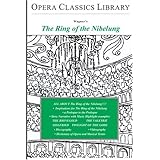
Wagner's The Ring of the Nibelung (Opera Classics Library Series) Review

Wagner's The Ring of the Nibelung (Opera Classics Library Series)
Average Reviews:

(More customer reviews)
Are you looking to buy Wagner's The Ring of the Nibelung (Opera Classics Library Series)? Here is the right place to find the great deals. we can offer discounts of up to 90% on Wagner's The Ring of the Nibelung (Opera Classics Library Series). Check out the link below:

>> Click Here to See Compare Prices and Get the Best Offers

Wagner's The Ring of the Nibelung (Opera Classics Library Series) ReviewI was hesitant to include Wagner in my German lit course on the reception of the Nibelungen, but this book provided the answer. Its prose is so well written that it must truly be considered an artistic achievement in translating across mediums. Wagner is no easy read in its original form, and direct translations suffer, some graphic novels do an excellent job, but here the author combines the breadth of the Ring with an excellent efficient prose - truly magnificent!Wagner's The Ring of the Nibelung (Opera Classics Library Series) Overview

Want to learn more information about Wagner's The Ring of the Nibelung (Opera Classics Library Series)?

>> Click Here to See All Customer Reviews & Ratings Now
Read More...

Wagner's Ring and Its Symbols Review

Wagner's Ring and Its Symbols
Average Reviews:

(More customer reviews)
Are you looking to buy Wagner's Ring and Its Symbols? Here is the right place to find the great deals. we can offer discounts of up to 90% on Wagner's Ring and Its Symbols. Check out the link below:

>> Click Here to See Compare Prices and Get the Best Offers

Wagner's Ring and Its Symbols ReviewReading the first few pages of this book it became clear to me what the emphasis of this interpretation of Wagner's masterpiece would be, namely a Freudian/Jungian interpretation of the subconscious driving force behind Wagner's genius. I wasn't particularly receptive to this approach initially, notwithstanding the fact that I have a first degree in Psychology. However, the author's cogent and fluid arguments convinced me of the validity of such an interpretation.
Wagner as an artist allowed himself to be driven by his subconscious in his later works, allowing his conscious self to contribute only for the purpose of rounding off the work. On the basis of this a detailed understanding of Wagner's subconscious, and indeed the interplay between his subconscious and conscious self must be seen as of indispensable importance to an indepth evaluation of 'der Ring des Nibelungen'.
I think it is important to note that given the complexity of Wagner's Ring of the Nibelung such an interpretation does not preclude the relevance of other interpretations at different levels of abstraction. More orthodox evaluations of Wagner's tetralogy have concerned themselves with Wagner's apparent political and romantic motivations. While such interpretations are not necessarily incompatible with Donington's analysis the author looks beyond the realm of the salient in order to take us places that were closed even to Wagner himself.
Psychological analysis, particularly when of the Classical variety, may be unpalatable to many when used to interpret famous works of art. A common criticism of advocates of Freudian and Jungian psychology is that the theories to which they subscribe are outdated and often, in the case of Freudian psychoanalysis, fundamentally flawed. However, many such theories still resonate today and in fact the appearance of what 'hard' scientists may deem outdated terminology is a perfectly apt and valid way to deal with the issues in this particular artistic work. The use of words like 'ego', as when contrasted with the 'subconscious', might deter the interest of some, but Donington uses such terminology interchangeably with more contemporary expressions such as 'conscious will' and certainly from a psychological and neuroscientific perspective the conscious-subconscious duality is as relevant now as it ever was.
Donington uses his knowledge of Freudian and Jungian psychology to explain the Ring Cycle from a developmental psychology perspective. The power struggle between conscious-will, or ego, and the subconscious. Synonyms for such a conflict include power versus love (a popular understanding of the nature of the Ring Cycle) and the need of the self to reconcile individuality with a union to nature. Wagner completed the cycle over 26 years, a time during which he went through many a psychological and musical transformation - transformation being the key to the whole cycle according to the author.
Donington describes the developmental process that underlies the transformation that we all must go through. From separation of the conscious and the subconscious, in order to derive individuality and 'extra-natural' existence, to reconciliation of the two components of psyche to arrive at the self, a harmonised amalgum of individual and nature. Wagner's difficulty at making the psychological transformation from the conscious-willing, controlling individual to the mature, compassionate and fulfilled self is then convincingly claimed to be the driving force behind Wagner's creative expression particularly embodied in the Ring Cycle.
That Donington has a particular angle on Wagner's Ring Cycle is to the book's credit rather than its detriment as it elucidates context which serves to engender and maintain interest in the reader when the narrative and musical symbolism of the work is described. I have read other books detailing Wagner's myths that seem pedestrian by comparison owing to a 'walk-through' approach.
Some descriptions are perhaps open to debate, e.g., is Alberich renouncing compassionate love or is he in fact renouncing naive love? Perhaps, through subconscious projection on to Alberich, Wagner is closer to overcoming his own longing for naive and unobtainable love than even the author imagines. In essence this point is not actually inconsistent with the tenor of that proposed by the author.
Other petty points may be proferred but the general consistency of argument and clarity of presentational style leave you feeling that you have ventured on yet another sparkling ring. This book rewards the patient and is a must for any Wagnerite/Ring Cyle enthusiast.Wagner's Ring and Its Symbols Overview

Want to learn more information about Wagner's Ring and Its Symbols?

>> Click Here to See All Customer Reviews & Ratings Now
Read More...

Wagner's Ring of the Nibelung Review

Wagner's Ring of the Nibelung
Average Reviews:

(More customer reviews)
Are you looking to buy Wagner's Ring of the Nibelung? Here is the right place to find the great deals. we can offer discounts of up to 90% on Wagner's Ring of the Nibelung. Check out the link below:

>> Click Here to See Compare Prices and Get the Best Offers

Wagner's Ring of the Nibelung ReviewThis book would be an excellent addition to anyone interesting in Wagner's Ring cycle for a number of reasons.
First, the translation, which takes up three quarters of the book, is well done, with German and English directly compared on a line by line basis, complete with alternate or discarded or rejected versions of the libretto included in an appendix. The translation itself seems outstanding; some of Wagner's phrasing is difficult or impossible to directly translate into English, but even in the most convoluted or confusing cases the result is clear and compelling.
Second, there is a thematic guide to many of the most important leitmotifs Wagner developed (67 in this case), and in the translation of the libretto the authors have noted where these occur on a line by line, or sequential basis. This is of tremendous help as a reference for further study when listening and relistening to the music.
Third, while there is only little commentary on the operas and on Wagner's compositional journey through the Ring, there are a few photos from past performances, comparing vastly different sets for the same scenes, which are interesting. There could have been quite a bit more of this.
Finally, the glossary of character names could be useful to the student.
Overall, this is an excellent resource and reference to use while listening to the Ring, and for analyzing Wagner's libretto itself.Wagner's Ring of the Nibelung Overview

Want to learn more information about Wagner's Ring of the Nibelung?

>> Click Here to See All Customer Reviews & Ratings Now
Read More...