Showing posts with label philosophy. Show all posts

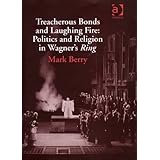
Treacherous Bonds And Laughing Fire: Politics And Religion in Wagner's Ring Review

Treacherous Bonds And Laughing Fire: Politics And Religion in Wagner's Ring
Average Reviews:

(More customer reviews)
Are you looking to buy Treacherous Bonds And Laughing Fire: Politics And Religion in Wagner's Ring? Here is the right place to find the great deals. we can offer discounts of up to 90% on Treacherous Bonds And Laughing Fire: Politics And Religion in Wagner's Ring. Check out the link below:

>> Click Here to See Compare Prices and Get the Best Offers

Treacherous Bonds And Laughing Fire: Politics And Religion in Wagner's Ring ReviewWagner wanted to write music for the revolution. Mark Berry reminds us of this in an exciting new book that catapults us back to the heady turmoil of nineteenth-century political thought. Wagner was using the ancient myth of the Ring to dramatise the struggle of deadening powers of technology, economics, law and bourgeois morality with the eternal human spirit of freedom and love. Mark Berry's treatment of this shows he is the most important new person writing today about Wagner. Anyone wanting to think seriously about Wagner and his milieu must read Berry's important new book.Treacherous Bonds And Laughing Fire: Politics And Religion in Wagner's Ring Overview

Want to learn more information about Treacherous Bonds And Laughing Fire: Politics And Religion in Wagner's Ring?

>> Click Here to See All Customer Reviews & Ratings Now
Read More...

Book of Five Rings Review

Book of Five Rings
Average Reviews:

(More customer reviews)
Are you looking to buy Book of Five Rings? Here is the right place to find the great deals. we can offer discounts of up to 90% on Book of Five Rings. Check out the link below:

>> Click Here to See Compare Prices and Get the Best Offers

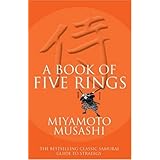
Book of Five Rings ReviewThe book written by the samurai warrior Miyamoto Musashi circa 1645 is considered a classic treatise on military strategy, and it enjoys an audience considerably broader than only that of martial artists: for instance, some business leaders find its discussion of conflict and taking the advantage to be relevant to their work.
The term "Ichi School", which is referred to in the book, Go Rin No Sho, when referring to such books, refers to "Niten No Ichi Ryu", or "Ni Ten Ichi Ryu", which literally translated, means "Two Swords, one heaven".
Throughout the book it is clear: what is primary for Musashi is The Goal, while the means of achieving the goal are secondary. He wrote "According to this Ichi school, you can win with a long weapon, and yet you can also win with a short weapon. In short, the Way of the Ichi school is the spirit of winning, whatever the weapon and whatever its size."
The same is in business: the leaders who are attracted by the goal rather than by embellishments are the true leaders. For example, the dot-com bubble of 2000 was caused by the managers who forgot about the primary goal of the business: net income. Those who were obsessed by their stock prices regarding of massive losses and the lack of revenue became bankrupt. They put attention to the fancy office buildings and furniture rather than to the assets that generate earning. Musashi wrote about it: "Just as a horse must have endurance and no defects, so it is with weapons. Horses should walk strongly, and swords and companion swords should cut strongly. Spears and halberds must stand up to heavy use: bows and guns must be sturdy. Weapons should be hardy rather than decorative".
Musashi also encourages to maintain a balance of your skills throughout your life. This balance could be thought of as Yin and Yang. The balance is to be neither over-familiar with something nor under-familiar. The over-familiarity or over-use of one weapon is not recommended by Musashi, as it would be seen to reveal your spirituality to your enemy, and thus your boisterousness, or over-calm. The over-familiarity makes you stick to a conviction. This is a very important for the business. Take, for example, mr. Warren Buffet. A quality standing out about Mr. Buffett is his ability to morph. If you read his materials from the 1960s, he said very different things than in the 1970s and early-1980s. Early on he was buying dirt-cheap stocks by simple statistical standards and typically smaller stocks (smallcap), later he bought "franchises", then he entered a period of buying great managements of big companies and being a long-term holder, then, amazingly, he was buying smaller things dirt cheap again just as value came back into play as the twenty-first century began. He tactically morphed steadily over the decades. Trying to freeze his tactics from any decade and replicate them in the next few would never have led you to his actual actions. Musashi wrote about that this way: "You should not have a favourite weapon. To become over-familiar with one weapon is as much a fault as not knowing it sufficiently well. You should not copy others, but use weapons which you can handle properly. It is bad for commanders and troops to have likes and dislikes."Book of Five Rings Overview

Want to learn more information about Book of Five Rings?

>> Click Here to See All Customer Reviews & Ratings Now
Read More...

The Redeemer Reborn: Parsifal as The Fifth Opera of Wagner's Ring Review

The Redeemer Reborn: Parsifal    as The Fifth Opera of Wagner's  Ring
Average Reviews:

(More customer reviews)
Are you looking to buy The Redeemer Reborn: Parsifal as The Fifth Opera of Wagner's Ring? Here is the right place to find the great deals. we can offer discounts of up to 90% on The Redeemer Reborn: Parsifal as The Fifth Opera of Wagner's Ring. Check out the link below:

>> Click Here to See Compare Prices and Get the Best Offers

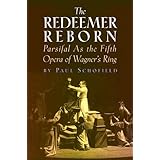
The Redeemer Reborn: Parsifal as The Fifth Opera of Wagner's Ring ReviewThis is an utterly marvelous book that I would very much recommend to anyone interested in Wagner. The author discusses Wagner's Ring and Parsifal within the context of Hinduism, Buddhism, Greek tragedy, Christianity, and the Grail legends. The fact that the author is able to discuss Wagner's work within the context of all of these spiritual sources in many ways explains why Wagner's music is viewed in mystical and quasi-religious terms by so many of his devotees.
The author analyzes the impact of Buddhism and Hinduism in Schopenhauer's writings. Schopenhauer of course had a major impact on Wagner's thought and it is interesting to see the mingling of Eastern and Western culture in Wagner's output. The author's discussion of Greek tragedy and the Grail legends is also insightful and revealing. Fans of Joseph Campbell will enjoy this book with its cross-cultural references. Those interested in the ideas of Carl Jung, particularly his concept of the "collective unconscious", will also find this book appealing.
The belief that the opera Parsifal shares many of the same emotional currents as the Ring is an idea shared by at least one other author, Robert Donnington, in his also magnificent book, "Wagner's Ring and Its Symbols." It is fairly easy to see the parallels between Siegfried and Parsifal as both begin their emotional journeys as impetuous and immature youths. Both ultimately achieve a state of wisdom with that wisdom coming sooner and probably more completely to Parsifal. There are also parallels between Wotan and Amfortas as both are very troubled men attempting to seek some level of redemption and peace.
As stated above, I would also recommend Robert Donnington's "Wagner's Ring and Its Symbols." Both of these books provide tremendous insight into the phenomenal and incredible Der Ring des Nibelungen of Richard Wagner.The Redeemer Reborn: Parsifal as The Fifth Opera of Wagner's Ring Overview

Want to learn more information about The Redeemer Reborn: Parsifal as The Fifth Opera of Wagner's Ring?

>> Click Here to See All Customer Reviews & Ratings Now
Read More...

Ten Rings: My Championship Seasons Review

Ten Rings: My Championship Seasons
Average Reviews:

(More customer reviews)
Are you looking to buy Ten Rings: My Championship Seasons? Here is the right place to find the great deals. we can offer discounts of up to 90% on Ten Rings: My Championship Seasons. Check out the link below:

>> Click Here to See Compare Prices and Get the Best Offers

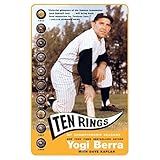
Ten Rings: My Championship Seasons ReviewReading 'Ten Rings' is simple fun. It's about 212 pages that feel like 80. The book has a brief introduction to Yogi's life before becoming a Yankee. There are ten chapters - one for each World Series championship season Yogi enjoyed as a Yankee - and then Yogi wraps up with a few more observations on baseball and his life.
What else are you going to get from Yogi's 'Ten Rings?' The best aspect of the book is Yogi's appraisal of two things. First, Yogi offers glimpses into the personalities of people like Joe DiMaggio, Mickey Mantle, Phil Rizzuto, and other Yankees. There is no tell-all or in-depth analysis of their lives, just simple commentaries on them as ballplayers and teammates. By focusing on these friends and teammates, he tries to pass on what it meant (and still means today) to be a New York Yankee and a winner. Occasionally he'll stray to comparing those ballplayers to some of today's, something he could have done much more of to add a bit more depth to the book.
Next, Yogi turns the focus back on himself. Here he is more frank - and still funny - than I expected. In each championship season he highlights the accomplishments anyone would be proud of, whether it's hitting .300 or driving in 100 RBIs. Yogi's not boastful in any way, but reading about his 'Ten Rings' you do get the sense of how underrated he was even back then. Most baseball people didn't give him enough credit unless he was winning a World Series, hitting a home run, or taking home three American League MVP awards.
'Ten Rings' is more amusing than hilarious. Yogi talks about his Yogi-isms but doesn't dwell on them. For a good laugh he has written other books filled with that stuff. This is just a simple read. I read it on three successive nights before going to bed...and I don't even like the Yankees.Ten Rings: My Championship Seasons Overview

Want to learn more information about Ten Rings: My Championship Seasons?

>> Click Here to See All Customer Reviews & Ratings Now
Read More...

Wagner's Ring and Its Symbols Review

Wagner's Ring and Its Symbols
Average Reviews:

(More customer reviews)
Are you looking to buy Wagner's Ring and Its Symbols? Here is the right place to find the great deals. we can offer discounts of up to 90% on Wagner's Ring and Its Symbols. Check out the link below:

>> Click Here to See Compare Prices and Get the Best Offers

Wagner's Ring and Its Symbols ReviewReading the first few pages of this book it became clear to me what the emphasis of this interpretation of Wagner's masterpiece would be, namely a Freudian/Jungian interpretation of the subconscious driving force behind Wagner's genius. I wasn't particularly receptive to this approach initially, notwithstanding the fact that I have a first degree in Psychology. However, the author's cogent and fluid arguments convinced me of the validity of such an interpretation.
Wagner as an artist allowed himself to be driven by his subconscious in his later works, allowing his conscious self to contribute only for the purpose of rounding off the work. On the basis of this a detailed understanding of Wagner's subconscious, and indeed the interplay between his subconscious and conscious self must be seen as of indispensable importance to an indepth evaluation of 'der Ring des Nibelungen'.
I think it is important to note that given the complexity of Wagner's Ring of the Nibelung such an interpretation does not preclude the relevance of other interpretations at different levels of abstraction. More orthodox evaluations of Wagner's tetralogy have concerned themselves with Wagner's apparent political and romantic motivations. While such interpretations are not necessarily incompatible with Donington's analysis the author looks beyond the realm of the salient in order to take us places that were closed even to Wagner himself.
Psychological analysis, particularly when of the Classical variety, may be unpalatable to many when used to interpret famous works of art. A common criticism of advocates of Freudian and Jungian psychology is that the theories to which they subscribe are outdated and often, in the case of Freudian psychoanalysis, fundamentally flawed. However, many such theories still resonate today and in fact the appearance of what 'hard' scientists may deem outdated terminology is a perfectly apt and valid way to deal with the issues in this particular artistic work. The use of words like 'ego', as when contrasted with the 'subconscious', might deter the interest of some, but Donington uses such terminology interchangeably with more contemporary expressions such as 'conscious will' and certainly from a psychological and neuroscientific perspective the conscious-subconscious duality is as relevant now as it ever was.
Donington uses his knowledge of Freudian and Jungian psychology to explain the Ring Cycle from a developmental psychology perspective. The power struggle between conscious-will, or ego, and the subconscious. Synonyms for such a conflict include power versus love (a popular understanding of the nature of the Ring Cycle) and the need of the self to reconcile individuality with a union to nature. Wagner completed the cycle over 26 years, a time during which he went through many a psychological and musical transformation - transformation being the key to the whole cycle according to the author.
Donington describes the developmental process that underlies the transformation that we all must go through. From separation of the conscious and the subconscious, in order to derive individuality and 'extra-natural' existence, to reconciliation of the two components of psyche to arrive at the self, a harmonised amalgum of individual and nature. Wagner's difficulty at making the psychological transformation from the conscious-willing, controlling individual to the mature, compassionate and fulfilled self is then convincingly claimed to be the driving force behind Wagner's creative expression particularly embodied in the Ring Cycle.
That Donington has a particular angle on Wagner's Ring Cycle is to the book's credit rather than its detriment as it elucidates context which serves to engender and maintain interest in the reader when the narrative and musical symbolism of the work is described. I have read other books detailing Wagner's myths that seem pedestrian by comparison owing to a 'walk-through' approach.
Some descriptions are perhaps open to debate, e.g., is Alberich renouncing compassionate love or is he in fact renouncing naive love? Perhaps, through subconscious projection on to Alberich, Wagner is closer to overcoming his own longing for naive and unobtainable love than even the author imagines. In essence this point is not actually inconsistent with the tenor of that proposed by the author.
Other petty points may be proferred but the general consistency of argument and clarity of presentational style leave you feeling that you have ventured on yet another sparkling ring. This book rewards the patient and is a must for any Wagnerite/Ring Cyle enthusiast.Wagner's Ring and Its Symbols Overview

Want to learn more information about Wagner's Ring and Its Symbols?

>> Click Here to See All Customer Reviews & Ratings Now
Read More...

Ring of Truth Review

Ring of Truth
Average Reviews:

(More customer reviews)
Are you looking to buy Ring of Truth? Here is the right place to find the great deals. we can offer discounts of up to 90% on Ring of Truth. Check out the link below:

>> Click Here to See Compare Prices and Get the Best Offers

Ring of Truth Review...this is the book for you. A slim volume full of wisdom. The author, in his task of translating the New Testament from Greek to English, experienced many serendipitous moments that pointed him to the truth of the Gospel accounts.Ring of Truth Overview

Want to learn more information about Ring of Truth?

>> Click Here to See All Customer Reviews & Ratings Now
Read More...

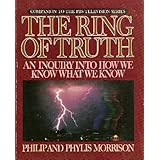
The Ring of Truth: An Inquiry into How We Know What We Know Review

The Ring of Truth: An Inquiry into How We Know What We Know
Average Reviews:

(More customer reviews)
Are you looking to buy The Ring of Truth: An Inquiry into How We Know What We Know? Here is the right place to find the great deals. we can offer discounts of up to 90% on The Ring of Truth: An Inquiry into How We Know What We Know. Check out the link below:

>> Click Here to See Compare Prices and Get the Best Offers

The Ring of Truth: An Inquiry into How We Know What We Know ReviewI read this book about 10 years ago, and have lent it to so many people, I finally lost track of it. I still want it, so I ordered it again. I want to share it with my kids. The writing is simple, but explains a lot. It explains HOW we know what we know, not WHAT we know. It talks about the development of the human mind vs. all other animals, how we learn, and how we came up with such fantastic inventions and discoveries. It's the best bbok on the subject that I've ever read.The Ring of Truth: An Inquiry into How We Know What We Know Overview

Want to learn more information about The Ring of Truth: An Inquiry into How We Know What We Know?

>> Click Here to See All Customer Reviews & Ratings Now
Read More...

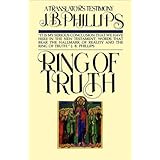
Ring of Truth: A Translator's Testimony Review

Ring of Truth: A Translator's Testimony
Average Reviews:

(More customer reviews)
Are you looking to buy Ring of Truth: A Translator's Testimony? Here is the right place to find the great deals. we can offer discounts of up to 90% on Ring of Truth: A Translator's Testimony. Check out the link below:

>> Click Here to See Compare Prices and Get the Best Offers

Ring of Truth: A Translator's Testimony ReviewThis is a wonderful little book. Phillips describes how, as a translator, he had to engage deeply and thoughtfully with the original Greek text of the NT. Not only does he find the text to be historically accurate on a wide range of details, he finds that the stories "ring true." Jesus comes across not as a deified philosopher, but as a real, complex, and powerful personality--a human being who was gentle and caring with children and social outcasts, but strong, courageous, and confrontive in challenging the hypocrisy of the highly revered religious powers that be. Phillips specifically lists a number of places where the close attention required by translating brought him face to face with suprising, sometimes shocking, new ideas about Jesus, God, and humanity. This book is well worth every penny you will invest in it, and every moment of time you will spend reading it and thinking about what it says.Ring of Truth: A Translator's Testimony Overview

Want to learn more information about Ring of Truth: A Translator's Testimony?

>> Click Here to See All Customer Reviews & Ratings Now
Read More...

The Philosophy of Tolkien: The Worldview Behind the Lord of the Rings Review

The Philosophy of Tolkien: The Worldview Behind the Lord of the Rings
Average Reviews:

(More customer reviews)
Are you looking to buy The Philosophy of Tolkien: The Worldview Behind the Lord of the Rings? Here is the right place to find the great deals. we can offer discounts of up to 90% on The Philosophy of Tolkien: The Worldview Behind the Lord of the Rings. Check out the link below:

>> Click Here to See Compare Prices and Get the Best Offers

The Philosophy of Tolkien: The Worldview Behind the Lord of the Rings ReviewPeter Kreeft is a gifted writer. He is able to take some of the most difficult concepts and make them accessible to the reader. He is very concrete and clear. In this book about Tolkien, he states his objective concisely: "This book is not about Tolkien's world. It is about Tolkien's worldview, Tolkien's philosophy. Exploring that* can be another adventure. For while this philosophy is as much a part of Tolkien's world as its wars,...the philosophy is not on the surface,...but hidden beneath it,..." Kreeft uses a wealth of thinkers, philosophers, theologians, and writers to illuminate (or contrast) Tolkien's major ideas and ideals. He presents a virtue, a philosophy, or a theological concept, then defines it, expounds on it, and ties it to "The Lord of the Rings". He is also adept at applying his ideas to modern events such as 9/11. Then he takes excerpts from Tolkien's own books and provides the clincher.
As succinct as he is at this task, it is significant that he seldom mentions Tolkien for nearly the first sixty pages, and the introduction consists of only about twenty of them. Correspondingly significant, he quotes from C.S. Lewis more often than from Tolkien. However, this is a description, not a flaw, for he frames Tolkien well with Lewis. (Sometimes Lewis is better at describing the process and/or values of Tolkien.) He is masterful for tightly presenting key concepts from Plato, Dostoyevski, Sartre, G. K. Chesterton, and Hegel, just to name a few, and applying them to the framework of Tolkien's deepest beliefs. And, I must note, you don't have to have read any of these figures to understand the book or their references.
It is hard to argue with Kreeft. Like any of his books, you are backed into a corner, for which (thankfully, this reviewer believes) one must accept the Kreeft package or be a gifted debater. He is not one to compromise! I wonder what disparity there would be between a Christian and secular audience for this book. For the former, "The Philosophy of Tolkien" is soul food; for the latter, it may be a fascinating, extraneous, or infuriating experience depending on the taker. It is hard to say where Kreeft could have done better, but his other works resonate even better and seem even more seamless, but his execution is so remarkable that any minor criticisms should be taken with at least a grain of salt.
This is a brilliant book and a wonderful gift to readers. Peter Kreeft may take you on a different voyage than "The Lord of the Rings," but, while he challenges you, he does most of the work.
(Allegedly, it took Kreeft two years to publish this book because the Tolkien and Lewis estates are tight-fisted about their copyrights. If true, it would make this book a particular treasure.)
(*italicized, emphasis the author's)The Philosophy of Tolkien: The Worldview Behind the Lord of the Rings Overview

Want to learn more information about The Philosophy of Tolkien: The Worldview Behind the Lord of the Rings?

>> Click Here to See All Customer Reviews & Ratings Now
Read More...

The Battle for Middle-earth: Tolkien's Divine Design in "The Lord of the Rings" Review

The Battle for Middle-earth: Tolkien's Divine Design in The Lord of the Rings
Average Reviews:

(More customer reviews)
Are you looking to buy The Battle for Middle-earth: Tolkien's Divine Design in "The Lord of the Rings"? Here is the right place to find the great deals. we can offer discounts of up to 90% on The Battle for Middle-earth: Tolkien's Divine Design in "The Lord of the Rings". Check out the link below:

>> Click Here to See Compare Prices and Get the Best Offers

The Battle for Middle-earth: Tolkien's Divine Design in "The Lord of the Rings" ReviewProspective readers who are hesitating because of the theological tones of the title should stop worrying. Look beyond the author's name (which some of you may recognize as an Episcopalian priest and pretty well-known speaker) and the title indicating it will discuss Tolkien's "Divine Design". No matter what faith you do or do not profess, you cannot escape the fact that faith and scripture were very important to Tolkien himself. If you are interested in how it influenced him as a writer, read this book.
Rutledge has succeeded where few other books about Tolkien have: she presents the underlying grand themes of LOTR in a consistent, coherent and convincing manner. She makes the argument well, that Tolkien understood his work as theological at core, and that there is a continuous theological underpinning to the story. She calls this the "deep narrative", and throughout her book, she is consistently able to draw parallels between the surface narrative (the story) and the deeper theological one.
This is not to say that she at any time makes LOTR an "allegory" per se. LOTR is not, and was not intended by the author to be, a retelling of the Gospel story. LOTR is a stand-alone story, and can be read and enjoyed by anyone just by itself. In fact, the vast majority of us, who came to this story when teenagers or younger, loved the book from the moment we read it. It called something out of our souls, perhaps, and we understood something about the "deep narrative" simply by reading the story. The great gift of Tolkien is his ability to show us core truth about humanity this way, by storytelling.
Nevertheless, his devout Catholic Christianity and understanding of the influence of sin on all, underpins his story. Rutledge is excellent in discussion of how Tolkien shows us the good and evil in all creatures, and the necessity of reliance on Providence and grace. You will find a good explanation of Evil as a third force, between God and his incarnate creatures. She frequently mentions Tolkien's use of "passive voice" to indicate that the characters in LOTR are being used by the "other forces at work". While this comes as no surprise to any careful reader (I am sure all of us have noticed these continued references by Gandalf to "other forces" and being "meant to have" something or other!), once noticed, the passive voice becomes obvious throughout.
Rutledge supports her argument with frequent allusions to Bible passages, both Old and New Testament. And she convincingly argues that Tolkien really believed the small were being called to confound the wise, both in real life and in his book. She argues that scriptural underpinning for LOTR comes through both as direct influence on the story, but more often on the influence on Tolkien himself, who then wrote his values into LOTR. His understanding of the paradox of free will and the call of God, for instance.
All readers interested in the scriptural and theological influences on Tolkien (and they were considerable) will be interested in this book, whether you agree with the entire thesis or not. She does tend to over-reach, at times, for allusions to scripture. She is obviously not a fan of the movie, which she alludes to several times in her footnotes. But she is a careful reader herself. She came very late to the realm of Middle Earth, and does not bring years of "Tolkienalia" to the book, and this is a very great strength. Her decision to discuss the story as it unfolds, rather than break it down into grand concepts, was inspired and makes the book very easy to read.The Battle for Middle-earth: Tolkien's Divine Design in "The Lord of the Rings" Overview

Want to learn more information about The Battle for Middle-earth: Tolkien's Divine Design in "The Lord of the Rings"?

>> Click Here to See All Customer Reviews & Ratings Now
Read More...

Understanding The Lord of the Rings: The Best of Tolkien Criticism Review

Understanding The Lord of the Rings: The Best of Tolkien Criticism
Average Reviews:

(More customer reviews)
Are you looking to buy Understanding The Lord of the Rings: The Best of Tolkien Criticism? Here is the right place to find the great deals. we can offer discounts of up to 90% on Understanding The Lord of the Rings: The Best of Tolkien Criticism. Check out the link below:

>> Click Here to See Compare Prices and Get the Best Offers

Understanding The Lord of the Rings: The Best of Tolkien Criticism ReviewThis book reprints several of the best essays from the editors' 1968 collection *Tolkien and the Critics,* combining them with several new essays by some of the best Tolkien scholars writing today. Together, they make a strong case for the strength of Tolkien's masterpiece on solid literary grounds (rebutting the main early critiques). It is very useful for my Philosophy and Fantasy course, and the papers are all accessible and interesting for the general reader. I can strongly recommend this book to all fans and literary critics alike.Understanding The Lord of the Rings: The Best of Tolkien Criticism Overview

Want to learn more information about Understanding The Lord of the Rings: The Best of Tolkien Criticism?

>> Click Here to See All Customer Reviews & Ratings Now
Read More...

The Book of Five Rings (Bushido--The Way of the Warrior) Review

The Book of Five Rings (Bushido--The Way of the Warrior)
Average Reviews:

(More customer reviews)
Are you looking to buy The Book of Five Rings (Bushido--The Way of the Warrior)? Here is the right place to find the great deals. we can offer discounts of up to 90% on The Book of Five Rings (Bushido--The Way of the Warrior). Check out the link below:

>> Click Here to See Compare Prices and Get the Best Offers

The Book of Five Rings (Bushido--The Way of the Warrior) ReviewI have studied this book for years, and have read five different translations. The William Scott Wilson translation is by far the best. I always get the feeling that other translators are putting too much of themselves or their ideas about what Musashi is saying into the translations. Wilson's translation is clear and concise and yet does not feel filtered.
Here is a passage from the Thomas Cleary translation "Upset happens in all sorts of things. One way it happens is through a feeling of being under acute pressure. Another is through a feeling of unreasonable strain. A third is through a feeling of surprise at the unexpected."
Here is the same passage translated by Wilson "There are many kinds of agitation. One is a feeling of danger, a second is a feeling that something is beyond your capability and a third is a feeling of the unexpected. This should be investigated thoroughly."
They say the same thing, but Wilson is clearer.
As for the book itself, it is a classic masterpiece that describes not only a style of swordsmanship, but a way of living.The Book of Five Rings (Bushido--The Way of the Warrior) Overview

Want to learn more information about The Book of Five Rings (Bushido--The Way of the Warrior)?

>> Click Here to See All Customer Reviews & Ratings Now
Read More...

The Lord of the Rings and Philosophy: One Book to Rule Them All (Popular Culture and Philosophy) Review

The Lord of the Rings and Philosophy: One Book to Rule Them All (Popular Culture and Philosophy)
Average Reviews:

(More customer reviews)
Are you looking to buy The Lord of the Rings and Philosophy: One Book to Rule Them All (Popular Culture and Philosophy)? Here is the right place to find the great deals. we can offer discounts of up to 90% on The Lord of the Rings and Philosophy: One Book to Rule Them All (Popular Culture and Philosophy). Check out the link below:

>> Click Here to See Compare Prices and Get the Best Offers

The Lord of the Rings and Philosophy: One Book to Rule Them All (Popular Culture and Philosophy) ReviewThis book, despite the ostentatious title which Tolkien himself might've disavowed (he might humbly have thought that the Bible and other works, not his own books, were the true "books to rule them all"), is well worth reading.
It covers many aspects of philosophy and thought, including Plato, Nietzche, existentialism, Eastern religion, etc., which do not always receive the discussion vis-a-vis Tolkien that they deserve.
One of the best essays is Alison Milbank's "'My Precious': Tolkien's Fetishized Ring", an analysis which resembles Brenda Partridge's (in)famous 1983-or-so essay "No Sex, Please, We're Hobbits: The Construction of Female Sexuality in The Lord of the Rings", in its commentary on Shelob's scary voracity. Milbank also mentions Karl Marx's "commodity fetishism" as a factor in Tolkien's work (and the Ruling Ring is certainly one hot commodity in Middle-earth, even before Frodo "gives Gollum the finger" on Mount Doom and the action heats up a bit)...though Milbank notes that Tolkien probably had no "People's Republic of the Shire" in mind when writing Lord of the Rings!!
Another standout essay is "Happy Endings and Religious Hope: The Lord of the Rings as an Epic Fairy Tale" by John J. Davenport. Of all the essays, it perhaps draws most deeply on a variety of Tolkien's works, including the Silmarillion and Tolkien's influential essay "On Fairy-Stories". Davenport, whose essay is the last in the book (and, significantly, at the end of the "Ends and Endings" group of essays), poses the hope that "Day will come again" ("Aure entuluva" in the Elvish spoken at a desperate battle in the Silmarillion) not only in Middle-earth but also on our own earth, at least from Tolkien's Christian point of view which hopes for eventual reward for those who strive for right throughout their lives.
Davenport ably invokes the Beowulf epic, the tales of King Arthur, and the Tolkien-favorite medieval story of "Sir Gawain and the Green Knight" in showing how Tolkien's goal of finding "joy, poignant as grief" is forwarded through The Lord of the Rings' combination of epic narrative with "eucatastrophe", Tolkien's brilliant term meaning more-or-less "a catastrophe of good" or "a surprise turn for the better, such as found in fairy tales". And indeed, as Davenport notes, the various "eucatastrophes" in Tolkien's trilogy do leave one with a taste of hope for something better in our futures, dark as the interim may be.
Back to the book as a whole: although the still photo of the resurrected Gandalf from the Two Towers film gracing the cover looks a little cheesy (though still impressive), the light-from-above in the picture does remind us that there is something gleaming or "eternal" caught in the mesh of Tolkien's work, not mere idle fantasy. Though lacking the coherence and focus that a book-length piece would have, as opposed to the various scattered and short essays in "One Book to Rule Them All"--and I was sorely tempted to give only 4 stars for this book, because of this scatteredness--, "One Book" does a fine job of reminding us of the genius of Tolkien not only for entertaining narrative but also for offering serious thought about the meaning of life, and "One Book" does so all the better by its drawing on his fellow geniuses throughout the millenia to illustrate or complement his points.
Two thumbs up (and any ring-fingers left on one's hand).The Lord of the Rings and Philosophy: One Book to Rule Them All (Popular Culture and Philosophy) Overview

Want to learn more information about The Lord of the Rings and Philosophy: One Book to Rule Them All (Popular Culture and Philosophy)?

>> Click Here to See All Customer Reviews & Ratings Now
Read More...

The Book of Five Rings (Shambhala Classics) Review

The Book of Five Rings (Shambhala Classics)
Average Reviews:

(More customer reviews)
Are you looking to buy The Book of Five Rings (Shambhala Classics)? Here is the right place to find the great deals. we can offer discounts of up to 90% on The Book of Five Rings (Shambhala Classics). Check out the link below:

>> Click Here to See Compare Prices and Get the Best Offers

The Book of Five Rings (Shambhala Classics) ReviewThe book appears at first to be written simply; it stated the obvious. Written at a time when perhaps things were simpler.
This is NOT a book to read in one sitting, though you easily could.
Read just a bit, then put it down and walk away. Allow what you have read to be mulled over in your mind.
The book is really complex. It contains secrets to living every day, for dealing with everyone you encounter no matter what their state of mind is. It contains secrets about how to do business.
The title is a translation. Like English, words can have multiple meanings. What is translated into the word "ring" can also be translated into "spheres" which I think is a more appropriate translation. The sphere is the most perfect thing in the universe. Beginning at a point and drawing the ring/sphere/circle you will get to a point where the line begins again upon itself. This is a key to understanding the book.
Cleverly written, it holds the knowledge to live at peace with the universe.
An excellent read and mental workout.The Book of Five Rings (Shambhala Classics) Overview

Want to learn more information about The Book of Five Rings (Shambhala Classics)?

>> Click Here to See All Customer Reviews & Ratings Now
Read More...